
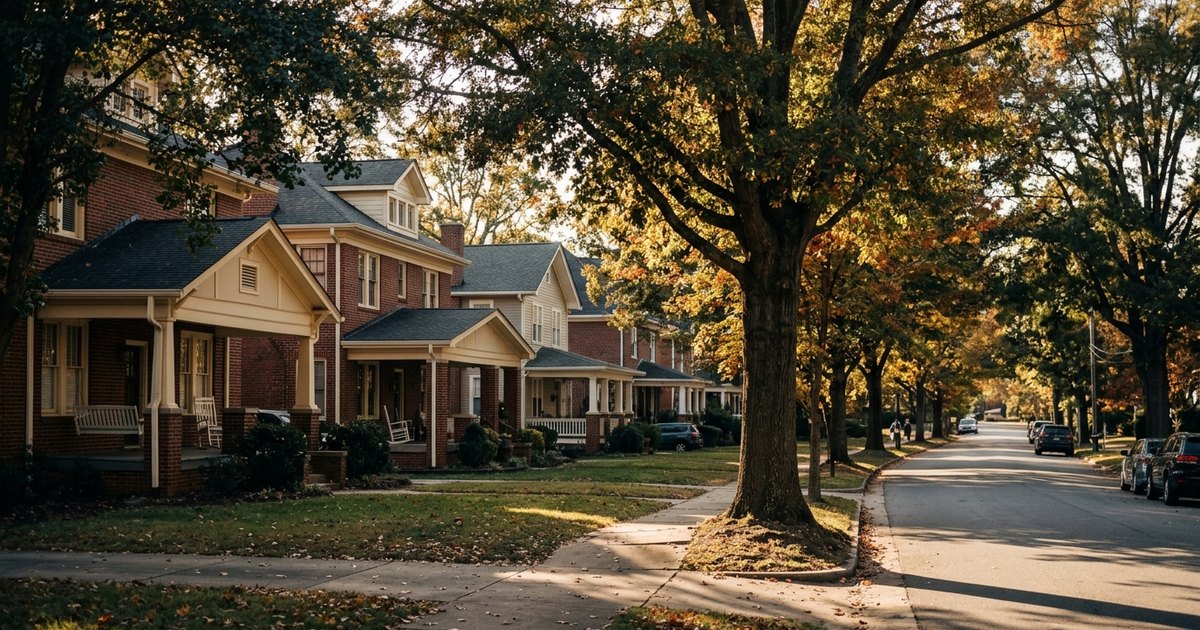
People ask me all the time: is Greensboro, NC a good place to live? I help people buy and sell homes across the Triad, and my honest answer is yes, for a lot of people, with a few trade-offs you should know about before you move. This guide covers what living in Greensboro is really like, what it costs, and the parts nobody puts on the welcome brochure.
Greensboro by the numbers
The short answer
Greensboro is a good place to live if you want a real city with real amenities, homes that still cost less than the national average, and a location that puts you within a few hours of both the mountains and the beach. It is a harder fit if you want big-city nightlife every night, a job market as deep as Charlotte or Raleigh, or a life without a car.
Search interest backs up what I see in my own phone calls. Searches for "is Greensboro NC a good place to live" are up about 50 percent over last year, according to DataForSEO keyword data. People are looking at the Triad, and a lot of them are coming from places where a starter home costs twice as much.
What it costs to live in Greensboro
Housing is the biggest reason people move here, so let's start there. Zillow put the typical Greensboro home value at about $263,000 in August 2026. That is roughly 29 percent below the national typical value of about $369,000, and below the North Carolina figure of about $335,000.
A January 2026 Stacker analysis found that a typical house payment in Greensboro takes about 27.8 percent of the median household income, compared with 34.4 percent nationally. In plain terms, the same paycheck goes further here.
Here is my dose of reality, though. "Cheaper than average" does not mean cheap. Prices across the Triad have climbed over the last several years, the nicer homes in popular areas still draw multiple offers, and property taxes, insurance, and HOA dues all belong in your budget. Get pre-approved with a local lender before you fall in love with a house, so you know your real number. If you are buying for the first time, my guide to NC first-time home buyer programs covers the down payment help available here.
What you will like about living in Greensboro
You can get anywhere
Greensboro sits where I-40, I-85, and I-73 meet, with the I-840 loop wrapping around the city. Piedmont Triad International Airport is a short drive from most neighborhoods. Raleigh and Charlotte are both roughly an hour and a half away, Boone and the Blue Ridge are about two hours west, and the coast is a long morning's drive east. For a lot of my clients, that central location is the whole point.
Parks, trails, and green space
For a city of its size, Greensboro has a surprising amount of green space. The Downtown Greenway loops around the city center for walkers and cyclists. The watershed lakes, Brandt, Townsend, and Higgins, have miles of wooded trails. Bicentennial Garden and the Bog Garden are quiet spots most locals know by heart, and the Greensboro Science Center is a favorite for families with kids.
Things to do downtown
Downtown has grown up a lot. LeBauer Park hosts concerts and events, the Tanger Center brings in touring Broadway shows and big-name acts, and the Greensboro Grasshoppers play minor league baseball right downtown. The International Civil Rights Center and Museum sits in the old Woolworth building, where the 1960 sit-ins began. It is a powerful visit and part of what makes this city's history its own.
A college town feel without being only a college town
UNC Greensboro, North Carolina A&T State University, Guilford College, Greensboro College, and Bennett College all call the city home. That brings in sports, lectures, arts, and a steady flow of younger energy, while most neighborhoods still feel settled and residential.
A growing job base
The region has landed some major employers in recent years, including the Toyota battery plant in nearby Liberty and Boom Supersonic's manufacturing site at the airport. Healthcare, logistics, and education are steady employers too. It is not Charlotte, but it is growing.
The trade-offs nobody puts on the brochure
I will never tell you a place is perfect. Here is what to weigh before you move:
- You will need a car. Greensboro has a bus system, but most daily life here is built around driving.
- Summers are hot and humid. July and August are sticky. Winters are mild, with only a little snow most years.
- Spring pollen is real. For a few weeks every spring, everything turns yellow. If you have allergies, plan for it.
- The job market is smaller than the big metros. If your field is highly specialized, check openings or plan on remote work before you commit.
- Neighborhoods vary block by block. Visit at different times of day, drive the commute at rush hour, and look up the things that matter to you, like school assignments and flood maps, from the official sources.
Greensboro, Winston-Salem, or High Point?
Many people who search for Greensboro end up comparing all three Triad cities. Greensboro is the largest and the most central. Winston-Salem has a strong arts scene and a big healthcare and research presence. High Point is smaller, home of the famous furniture market, and often a little more affordable. Plenty of people live in one and work in another, since the drive between them is short. My guide to the Triad walks through each one.
Moving to Greensboro: how I would plan it
If you are seriously thinking about moving to Greensboro, here is the order I suggest:
- Talk to a local lender first, so your budget is real before you shop.
- Pick two or three areas based on your commute, your must-haves, and your budget.
- Visit in person if you can, or ask me for a video walkthrough if you cannot.
- Leave room in your timeline for inspection, survey, and due diligence. My due diligence checklist explains why that matters so much in North Carolina.
If you are moving on military orders, my PCS guide to the Triad covers the timing pieces that are unique to you.
Frequently asked questions
Is Greensboro, NC a good place to live?
Yes, for many people. Greensboro offers home prices about 29 percent below the national typical value (Zillow, August 2026), a central location between Raleigh, Charlotte, the mountains, and the coast, and plenty of parks and universities. The trade-offs are a car-dependent layout, humid summers, and a smaller job market than the state's largest metros.
Is Greensboro cheaper than Raleigh or Charlotte?
Generally, yes. Greensboro's typical home value of about $263,000 sits below the statewide figure of about $335,000, and both Raleigh and Charlotte run above the state figure. Check current local data for the exact areas you are comparing.
How far is Greensboro from the beach and the mountains?
The Blue Ridge Mountains around Boone are about two hours west. The North Carolina coast is a longer drive east, usually three and a half hours or more depending on the beach you pick.
This article is general information, not legal, tax, or financial advice. If you are weighing a move and want a straight answer about a specific part of town, reach out. I will tell you what I would tell my own family. You will never sign blind.